

“What are our lungs supposed to do?” Kafka asks. “If they breathe too fast, they poison themselves; too slow, they suffocate; if they search for their own rhythm, they perish from the search.”
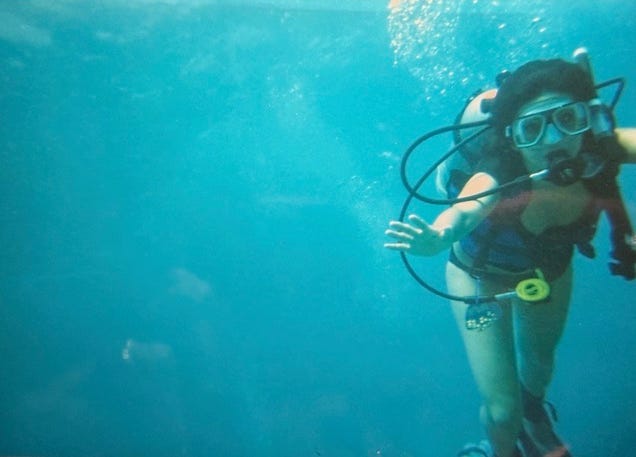
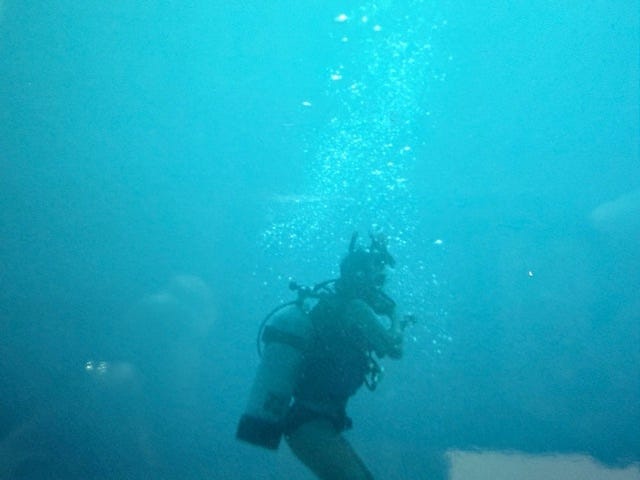
As a childhood asthmatic, I had to find my own rhythm for breathing again as an adult. It was first SCUBA diving that did this for me. Descending into the deep, using my breath for buoyancy and movement more than my body. Second, it was yoga. A way of remembering to breathe, and to co-ordinate movement and breath: create a picture of the body. In a sense, with diving my body disappeared. With yoga, it finally appeared again. If asthma is a constriction of breath that refuses to let go, exhale, then maybe diving was a first exhalation and yoga a new inspiration.
Athletes often turn breath into a practice of mastery. Breath is a training of breathing. After we are born we spend a lifetime modulating air—taken in, expelled, held, strained, lost, found again. We are told that breathing is automatic beneath consciousness, but anyone who has run hard enough knows that this is only half true. Breath is both involuntary and trainable, a function that becomes an art precisely at the point where it begins to fail.
There are different genres of breath in sport. The chaotic breath of the sprint, where the body outruns its own oxygen. The rhythmic breath of distance running, matched to stride and ground. The ecstatic breath of endurance, when something opens and the body seems to move beyond itself. And then there is anxious breath—the most intimate and the most humiliating—like when serving in a tennis game for match point. In psychoanalysis, we might say that breath is what we are meant to forget. Like sexuality, it recedes into the background, allowing life to proceed without constant awareness. We are meant to forget that we are breathing and yet breath can tip into obsession, even madness. Athletes undo this forgetting perhaps in order to better forget. That’s a thesis. I have no proof.
Consider the sprinter and activist Lee Evans, trained in part by choral director, Carl Stough, who understood breath not simply as physiology but as a whole body cure, a diaphragmatic expulsion. He cured veterans “by accident” using his choral techniques. Patients whose emphysema had left them bedridden instead were up and walking in weeks. Emphysema is still listed as an incurable disease. Singing, like running, is the organization of breath across time, a shaping of air into endurance. When he raised his fist at the 1968 Olympics, it was not only a political gesture but a respiratory one: a resistance to the easy breath of national pride, an interruption in the smooth circulation of spectacle. It was also a reminder that breath is social. We breathe with others in air that is shared, often contaminated even, when celebrated.
Free divers, not scuba divers, are perhaps the most uncanny figures here. They descend into depths without breathing, training themselves to override what feels like the most absolute command of the body: to inhale. The urge to breathe is not triggered by lack of oxygen but by the buildup of carbon dioxide: a signal that can be manipulated, extended, resisted. Divers learn to sit inside this signal, and resist, open themselves into an eerie silence and emptiness. Meanwhile they desaturate oxygen in their blood, redirecting it toward vital organs. They slow the heart. They enter a death driven trance, bolster their lungs against pressure, and survive as we once did under water. They also, like many extreme sports, die at a very high percentage. The same techniques that allow a diver to descend further can also lead to “shallow water blackout,” a loss of consciousness without warning. Breath, pushed too far, disappears.
The Hungarian psychoanalyst Sándor Ferenczi once speculated that our life on land is a kind of catastrophe, a forced departure from a blissful, wet, and supportive oceanic existence where breathing air as we know it did not exist. The diver returns, temporarily, to this lost environment. There is ecstasy in this. But also, extreme danger. Ferenczi says that such bliss ignores the reality that we live on land, breathe, and must live a life of friction, making it a kind of death driven pursuit of nirvana.
In the 2023 movie The Deepest Breath is a tragic love story as much as it is a documentary about free diving. Its main protagonist, Italian prodigy Alessia Zecchini, in the opening scene plunges one hundred meters into the dark and back in one breath. She meets her match in a safety diver (someone who waits 30 feet below the surface in case of an emergency) who coaxes her towards medals and world records while acting as her ballast underwater. It is he who dies trying to rescue her.
This oscillation between control and loss is present across sports. High-altitude climbers speak of breath as something that must be rationed, each step coordinated with an inhale, each movement dependent on a fragile intake of thin air. The body begins to break down; cognition falters; hallucinations are not uncommon. Climbers describe a strange intimacy with breath at altitude, as if each inhalation were a gift, each exhalation a risk.
Wim Hof and others have popularized breath techniques that promise transcendence of extreme temperatures, pain, even illness. Hyperventilation followed by breath retention produces altered states, tingling extremities, and a sense of expansion or dissociation. These practices border on the ecstatic, but also on the pathological and contagious. The line between training and symptom is not always clear. While the image is often of the liberated and free, deep and authentic breath; most of us know that the more sports-induced manner of breathwork courts chaos and strange rhythms to do impossible feats.
Indeed, many of the earliest patients in psychoanalysis presented with disturbances of breathing: choking, coughing, feelings of suffocation. Freud gives the example of a woman who asks, “Why must I breathe? Suppose I didn’t want to?” The question sounds absurd, but in sport it becomes a method. Suppose I didn’t want to—yet. Suppose I could wait. Suppose I could hold. Athletes learn to inhabit a threshold beyond their own egos, even as the whole act is in the service of ego. They triumph over life and human limits and impossibilities—risk themselves in order to be one of the elites.
But there is something less triumphant here that should be remembered.
Breath is also the site of dependency. It ties us to others and to our environment. The infant’s first breath is both an assertion of independence and a sign of absolute vulnerability: to breathe is to need. Breath reminds us that control is partial, that the body is not fully ours. To lose control of breath is to confront the possibility of not-being, of slipping out of life. Ferenczi suggests that children, especially, are vulnerable to this slipping away, and includes asthma as a feeling that one was unwelcome in life, not loved into being and bound to an environment.
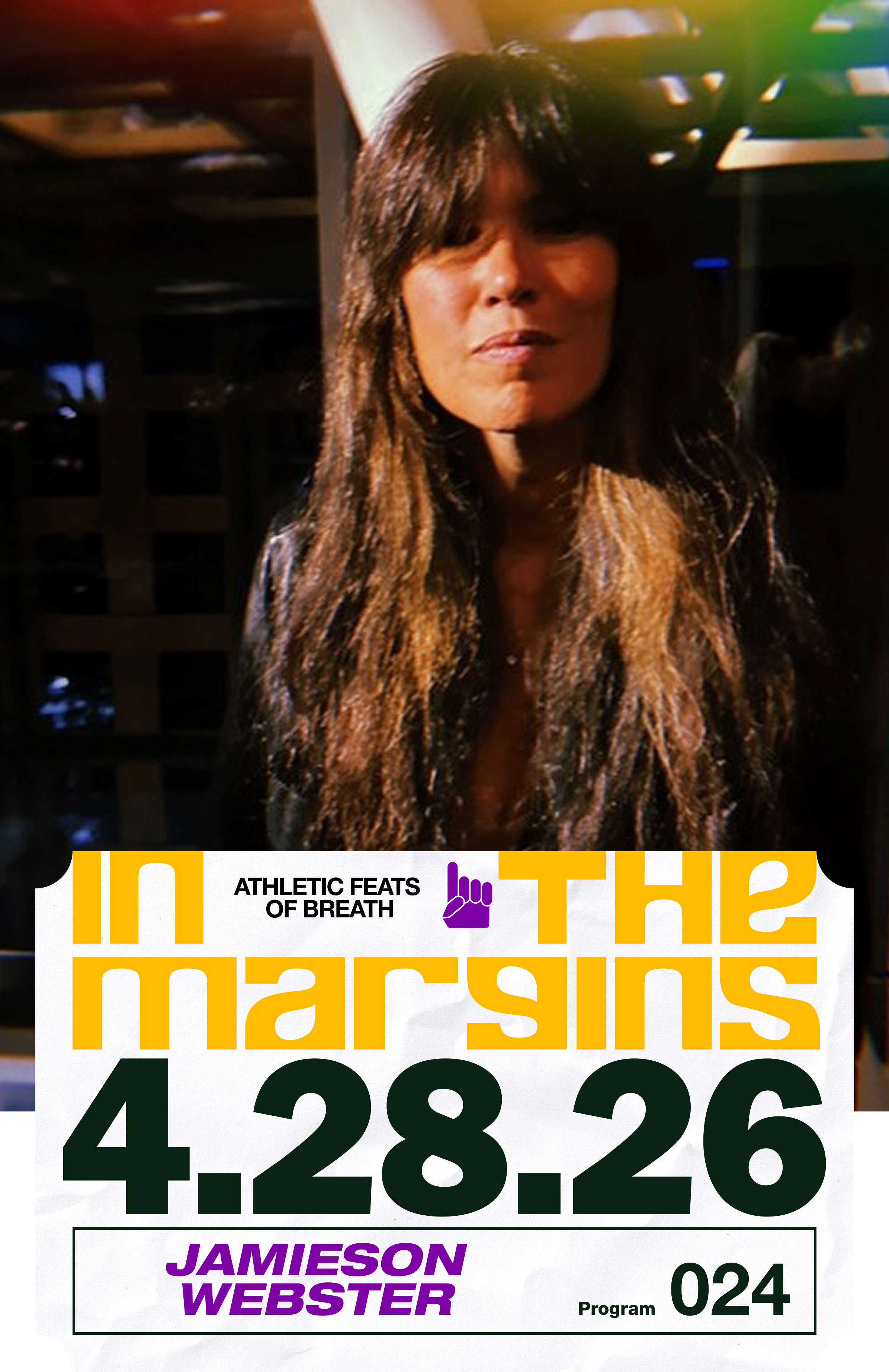
Jamieson Webster is a psychoanalyst and writer in New York City.
I love so much this essay. Thanks for sharing :)
One of the best thoughts so far... thank you for sharing!