

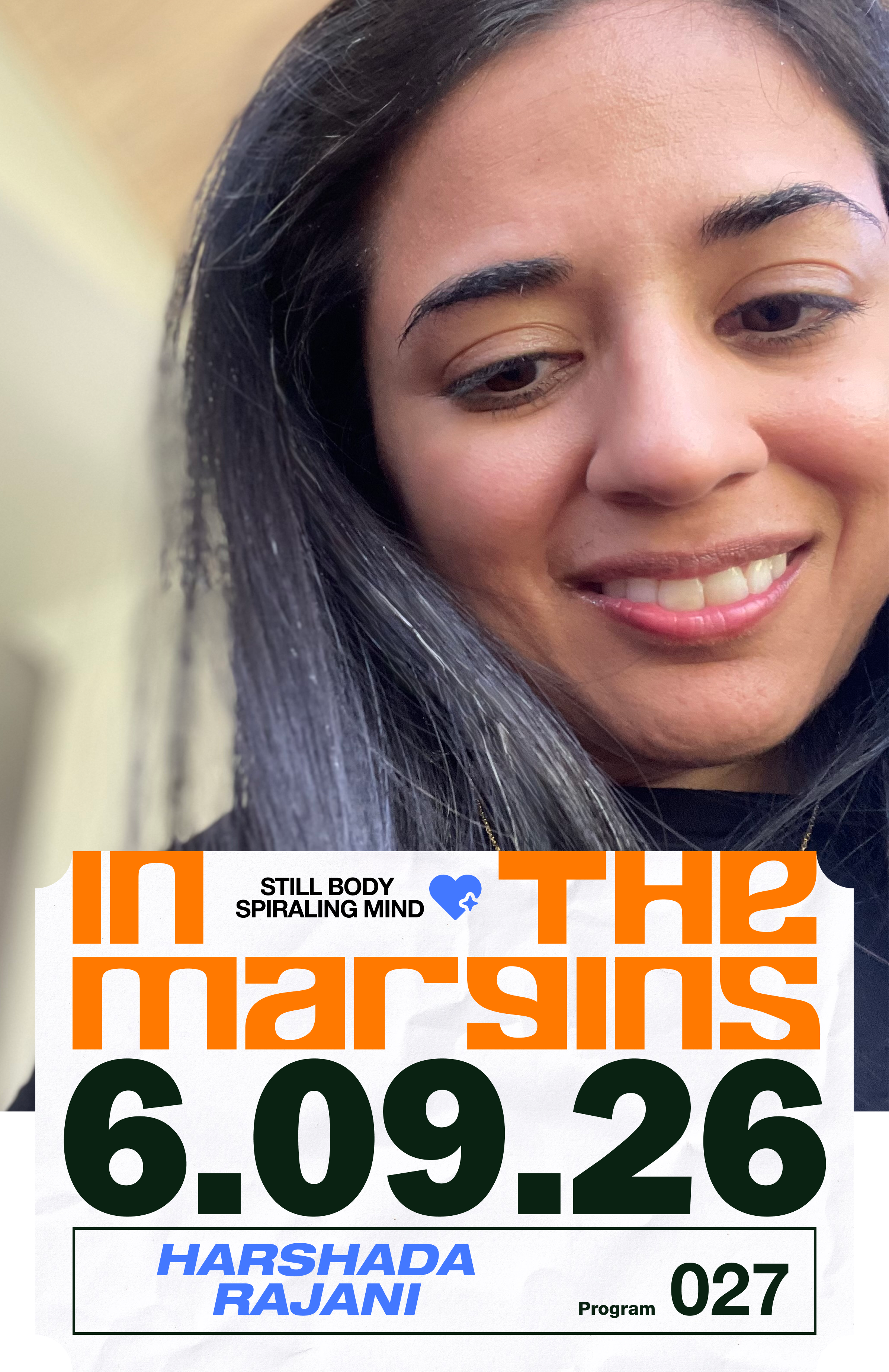
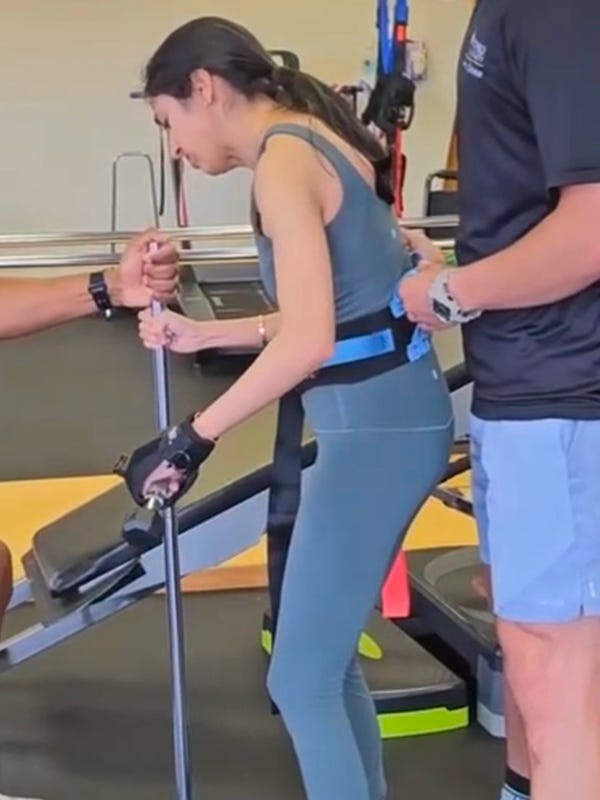
I stare at the grey walker in front of me, the silver metallic finish dulled from years of daily use by my ninety-year old grandmother. And, by me. She uses it far more than I do—I spend most of the day in a muted black electric wheelchair. But I walk with the walker and someone spotting me from behind, hands gripping my waist, each day for twenty minutes for exercise. And maybe for the sliver of hope I can’t seem to let go of that, one day, my body will come back to me. My neurons will remember walking like they used to remember a single-handed backhand slice or free throw or ballet pirouette; when my body moved freely.
Newton’s First Law of Motion states that all objects in motion remain so, unless acted upon by an external force. For the first twenty-three years of my life, I had been in constant motion. Sprinting, and sometimes stumbling, through midnight serenades and garden party dinners, hustling through physics exams and chemistry experiments, and meandering through tennis tournaments and Bhangra dance competitions. But in every life, no matter how swiftly you run or how deviously you hide, an unimaginable force can always find you. And it stops you. It stops you.
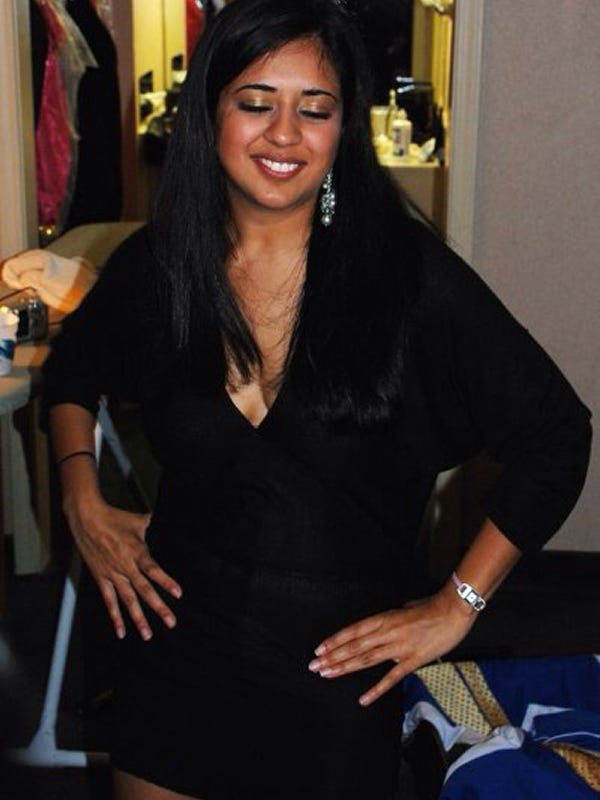
In my case, the force came in the form of a spontaneous brainstem stroke during medical school that stopped everything in my world and body except for eyes blinking and heart beating. I was forced to pivot from an active life of a future doctor to a sedentary, unemployable one. My body was entirely and inescapably still. But somehow, my mind still spiraled. Thoughts ricocheted off the sides of my cerebrum. Feelings and memories and wonderings leapt from the amygdala to hippocampus and back again. Neurotransmitters sashayed between synapses, stimulating changes throughout my brain.
In medical school, I had learned about the process of neuroplasticity: the brain’s ability to heal itself. My body couldn’t move anymore, but my brain clearly could. It could pump out new neurons to replace the ones that died from my stroke. It could revolutionize the way it once communicated with my muscles and forge new pathways.
I threw myself into rehabilitation. I believed if I worked hard enough, I could harness my brain’s movement and plasticity to help my body move again. I could regain all I had lost with intensive workouts and my brain’s potential. Day after day, week after week, I focused on that singular goal. Therapists dragged my limbs through the entire range of motion at the hip and shoulder joints. Hard, plastic splints flexed my wrists and ankles. Electrical stimulation triggered every muscle from within my forehead to my baby toe. Dry needling pinpricks up and down both arms massaged the muscles. I even watched an old video of my favorite dance performance from college every afternoon, mimicking the familiar movements in my mind, hoping to unlock some muscle memory. Every shoulder shake, every hip hike, every ordinary smile.
Slowly, movements began to poke through the stillness. A contraction of my left tricep here. A quiver of my right quad there. A syllable escaping from my pressed lips. An almost imperceptible shake of the head. They were barely noticeable, but they proved that messages from my brain were finally reaching my muscles. I redoubled my efforts, hoping to strengthen those new connections into actual movements. I could feel an epic comeback brewing like I could feel the imminence of Austin Rivers’ buzzer-beater in the ‘12 Duke vs. Carolina game. You just knew the ball was going to swish through the net, for the infamy, the lore, the story that had already been written.
But weeks turned into months, and then years.
My progress jumped and slipped and tripped and tumbled and strutted and wavered and stalled. My doctors and therapists had no answers. Medications offered only drowsiness. Pushing my body to its limits daily served only to underscore how limited it was. For the first time in my productive life, practice wasn’t proportional to progress. Not at all. In fact, more practice often yielded more setbacks—fatigued muscles, overstretched ligaments, hyperextended joints.
Some contractions did eventually turn into functional movements, and syllables turned into slurred words and fragmented breathy sentences. But most muscles wouldn’t contract without an entire choreography of muscles contracting with it. To engage my left hamstring, for example, I have to contort my facial muscles, squeeze my jaw, twist my head to the extreme right, tighten my already fisted left hand, relax the opposing muscle and engage my left bicep. Every movement is a battle within my own body.
I excitedly watched a video of myself standing and marching from that day’s therapy, an exercise I thought I had finally mastered, and I stared at my strained face. My painstakingly sluggish movements. My chest rising and falling too quickly. Hope seeped from me at the inhuman sight. There would be no epic comeback. The new neurons taking over for their fallen teammates were just backups for a reason. They would never execute as a precise, elite team again. Rage and frustration and fear charged through my mind. But I couldn’t stop trying. Couldn’t stop believing. What would my life be like if I let such a still life play out?
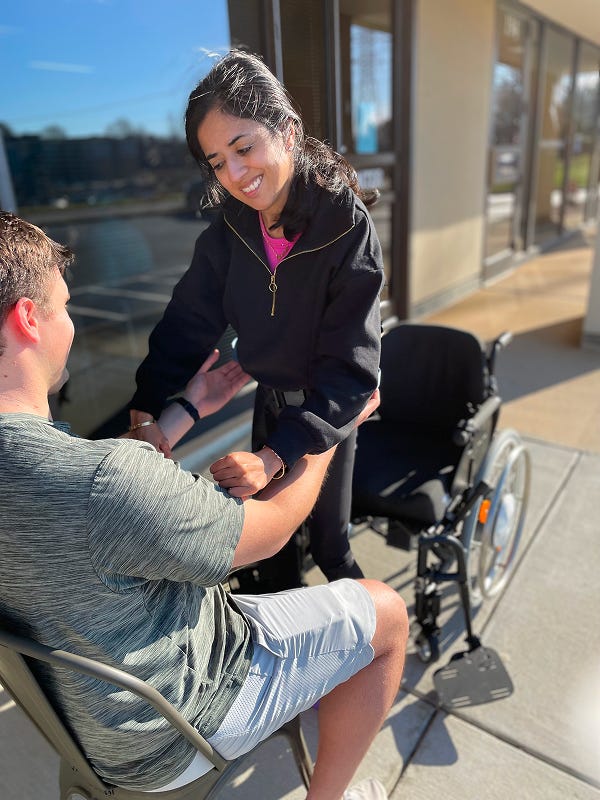
It’s taken me years to learn to live within my limits instead of incessantly pushing against them. To live in my body of today and not for some mythical, future body that may never appear. A wheelchair, instead of a body, helps me navigate the world. Other’s hands do for me what mine can’t anymore. I once relied on my body to not only sustain my life but to also participate in it. Now, I have had to create new ways to be a part of the living.
My body stopped moving but my mind never did. It thrums constantly with emotions and questions and insights and fears. But it needs an outlet. So with it, I dance on the page. I’ve decided to become a writer and allow my mind to spin freely; perhaps causing other minds to spin too. I twirl metaphors to explain my experience and twist sentences to discuss disability and ableism. I rely on my body to move enough to keep my heart healthy, figure palatable, and mind safe.
But more than an outlet, my mind needs input to fuel its movement. I fill it with books and movies and art and culture and experiences and friendships and travel. It’s forced me to push play on my life. And I discovered there was still movement, not the kind I imagined, but one that might be just as freeing.
Harshada Rajani is a writer, nonprofit cofounder and disability advocate based in Charlotte, NC.
❤️
Amazing! Harshada, this was beautiful! Thank you for “unabashedly” taking us on a journey through life in your eyes (body). Extremely helpful in understanding how movement works for you. You are nothing less of inspirational.