

Waiting for Randy Johnson
The sacred and strange in familiar colors
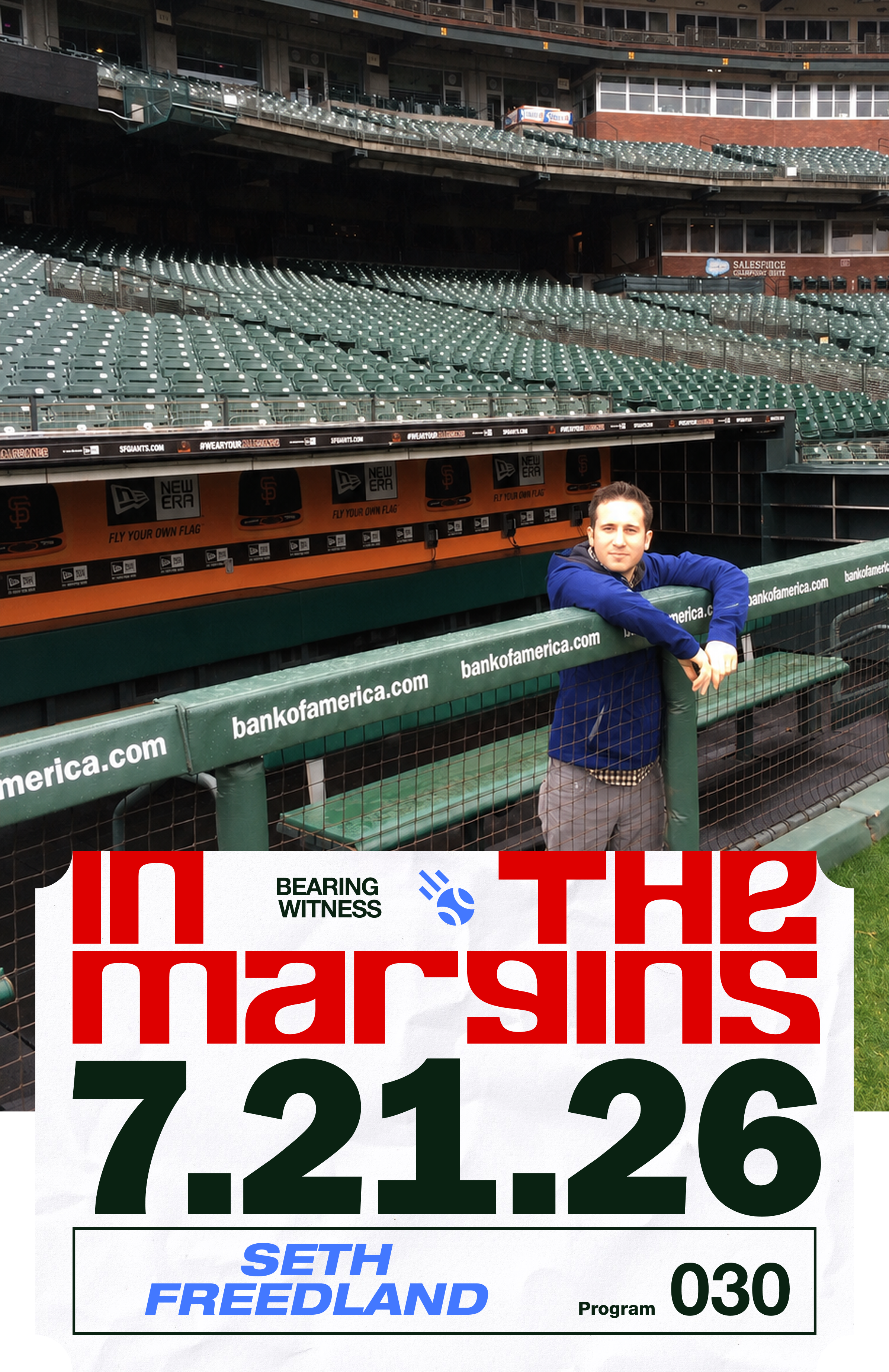
Years ago, living in Washington, D.C., I spent much of my time waiting for the San Francisco Giants to come to town. In 2009, the team was pretty dismal and when I circled a June 4th game, the first Giants tilt in D.C. that year, it wasn’t with much energy. All I wanted was to see my guys in person, watch a win or a loss—who really cared—and go home happy having spent the day at the ballpark.
But as June 4th approached, the humdrum game I had chosen was unexpectedly reborn as something far more interesting. It turned out that newly signed pitcher Randy Johnson would be getting a shot at a major milestone: his 300th career win.
Randy Johnson! You have to understand how odd it was that Johnson had become a Giant that year. This was one of the most accomplished and well-defined players in baseball history: the promising Expo, the sensational Mariner, the dominant Diamondback, a guy who stood 6’10”, throwing triple-digit fastballs with an arm angle that seemed to be coming down from Mt. Olympus, who for years sported a mullet and a mustache and who once threw a pitch that evaporated a bird in flight. By 2009, the book seemed fully written about Johnson, and yet, almost as an afterthought, here he was, a Giant.
At first, Giants fans weren’t sure how to emotionally process Randy Johnson wearing black and orange. He was otherworldly somehow, both right in front of us and also unknowable. But a consensus soon formed: who cares about logic and reason, let’s just delight in this guy’s weird company.
Delighting in Randy Johnson, for lack of a better phrase, felt good. It’s a truism that sports seasons are like comfort TV shows: the setting never changes, the dialogue is repetitive, and somehow that’s the appeal. But baseball and its infinite number of games take it to an almost meditative level. The idea is to lose yourself in baseball’s unending backbeat. Fans of the sport respond to that endlessness in different ways: reveling in box scores or player personalities or the poetic ballet of the double play. The important thing is to take from the game something that deepens your life—to feel something, to feel better, because of baseball.
And if baseball is a long conversation, the pitcher is the person fans listen to most closely. The pitcher’s job is to impose order: the same motion, the same spot, again and again, until insistence itself becomes a weapon. A trusted pitcher gives fans the illusion—sometimes briefly correct—that everything is under control. Every single pitch is a small act of faith, the idea that ritual can hold chaos at bay for one more moment.
So, with a shrug, Giants fans adopted Randy Johnson. And if the Big Unit was going to hit 300 wins in my town, who was I to turn down the chance? My friend Josh and I bought tickets and talked history.
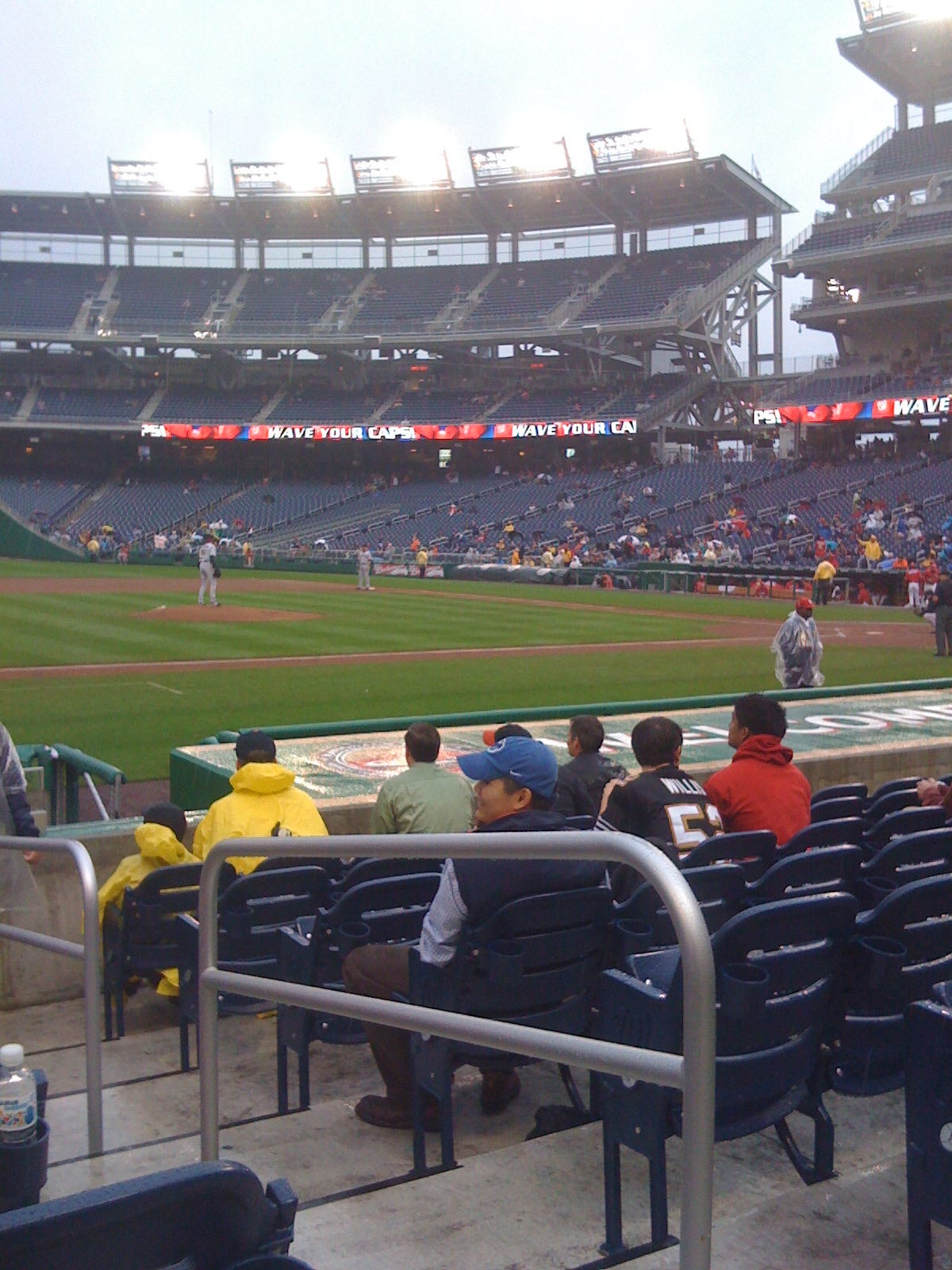
The day of the game, it rained and then it poured. We splashed our way into Nationals Park and once in the murmuring, over-crowded concourse, we surveyed the field. Deep flowing water was coursing off a blue tarp, currents rushing into dugout mouths. The sun shone weakly and a few thunderclaps fractured out. This game was getting delayed.
Soon, people—pantomiming great distress—began slinking away. Families vanished first. The concourse soon echoed; the worst stretches, soggy and filthy, looked like they’d been forsaken for decades.
Sitting alone in the seats behind home plate, Josh and I eventually watched the umpires and managers take the field and nod at each other. That was it, enough was enough, four hours of rain delay sufficient. The Jumbotron informed the hundreds of us remaining to go home already, and that the game would be made up the next day as the first game of a double-header.
The next conversation was brief and unnecessary: Josh and I would be back, of course. We fibbed our way out of work early and arrived at the ballpark for the scheduled first pitch. But the rain remained, splatting on players warming up in dark hoodies. Mercifully, it soon thinned to a drizzle and the announcement came for the game to begin, the sparse clapping from the thousand or so of us in attendance swallowed by the ballpark’s concrete latticework. At 5:17pm, underneath a gentle dampness and a sky the color of ash, the Nationals’ starter took the mound and the game got underway.
The truth is, I don’t remember much from the game itself. Mostly I remember two thoroughly mediocre offenses struggling to do much of anything. It’s only reading the box score years later that I’m reminded Johnson took a no-hitter into the fifth inning. Still, this wasn’t the Randy Johnson of yore, when the brutality of his pitching came with a sneer. The dude was forty-five goddamn years old and still dealing in a way that defied comparison, throwing grunt-aided mid-90s heat past fools who never had a chance. I can remember following the arc of his pitches and, man, the way the ball rose and sped up and dove and danced—so fast and from such a strange burst of limbs—it was as much like magic as anything I’ve seen. With guys like that science gets hard to understand.
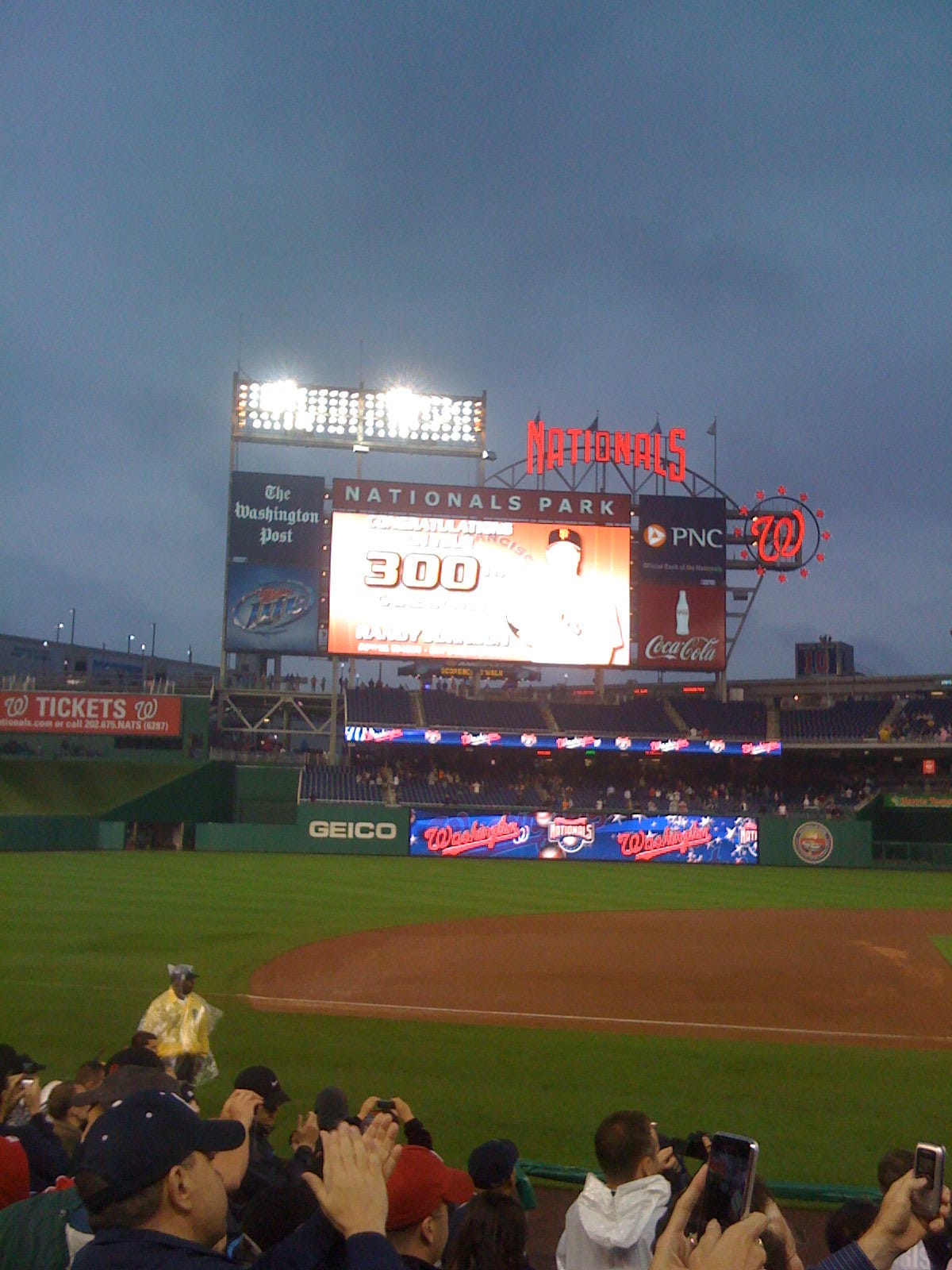
In the end, the Giants emerged victorious, and Johnson shuffled out of the dugout accepting hugs from teammates celebrating his 300th win. We chanted his name and he doffed his cap to us in a sweatshirt the size of a pup tent. It was only when he was flanked by teammates that his physical grandeur was clearest. He looked like a king surrounded by his subjects, shaking hands, waving, grinning in a way that seemed unfamiliar on his angular face. The swarm cleared and a half-hour later, the second game began. Josh and I stayed through maybe six innings before we slunk away. We had seen an accomplishment that—due to the modern evolution of the sport—hasn’t happened since and will almost certainly never occur again. Not bad for a Thursday.
On the Metro ride home, we turned the day over in our heads. I don’t know if it was the rainfall, our near-solitude in the stands or the proximity to borrowed greatness but the day felt spiritual. That’s fandom. Loving sports can feel a bit mystical and ridiculous—never more so for me than that day in D.C.
We spend our lives on the hunt for special moments like these, hanging on hope for opportunities to be joyful. Because who knows when the next one will come? Josh and I, sitting in that Metro car, never could’ve dreamt that those Giants would, the very next year, win the city’s first World Series. And then its second. And then its third. Randy Johnson wouldn’t be part of that dynasty—he retired after the 2009 season, finishing his singular career with 303 wins. Maybe our team would have gone on their surreal run to the mountaintop without this gangly lefty coming into our lives the year prior. But today, remembering Randy Johnson standing triumphantly inside a soaked near-empty stadium, holding his hat high, there’s just no way to be sure.
In his novel “The Art of Fielding,” Chad Harbach gets to the heart of the matter. “You loved it,” he writes of baseball, “because you considered it an art: an apparently pointless affair, undertaken by people with a special aptitude, which sidestepped attempts to paraphrase its value yet somehow seemed to communicate something true or even crucial about the Human Condition. The Human Condition being, basically, that we’re alive and have access to beauty, can even erratically create it, but will someday be dead and will not.”
We’re not just watching what’s happening—we’re tethered to it. The whole thing is sentiment writ large: the moment, the game, the sport. There’s hard reason and cold business all around us, but sometimes it puts Randy Johnson on your team, and suddenly you’re alive, with access to beauty—and you appreciate how normal that can be. It’s just a game, but that’s enough.
Seth Freedland is a writer living in Portland, Oregon, where he pitches for his rec league softball team.