

Sports rely on many things, but first they rely on space. In few other facets of modern life has this reliance persisted as stubbornly. Foundationally, sports consist of dynamic relationships between objects and bodies in space. Rules that prioritize and discriminate space give these relationships meaning. The space within the hoop denotes points. Ten yards is the space you must cover to continue to be on offense. Serves can land here, but not there. Collective knowledge of these rules imbue tiny differentiations of space with incredible significance so that an outstretched hand does not just miss the ball by an inch, but gives up a goal, murders a dream.
An initial empty space is required for these stylizations. Children easily intuit the relationship between space and the games it can support. The adult version of this is looking at the parking lot on the waterfront and saying “they could put a ballpark there.” Ballparks can be very large. The American Family Field in Milwaukee is 1.2 million square feet. Dodger Stadium commands 300 acres. To the attentive child, such massive spatial consumption communicates a set of values. I grew up going to Seattle Mariners games every summer, and that stadium’s grandeur confirmed what I already believed: sports are crucially important, and the people who play them are heroes.
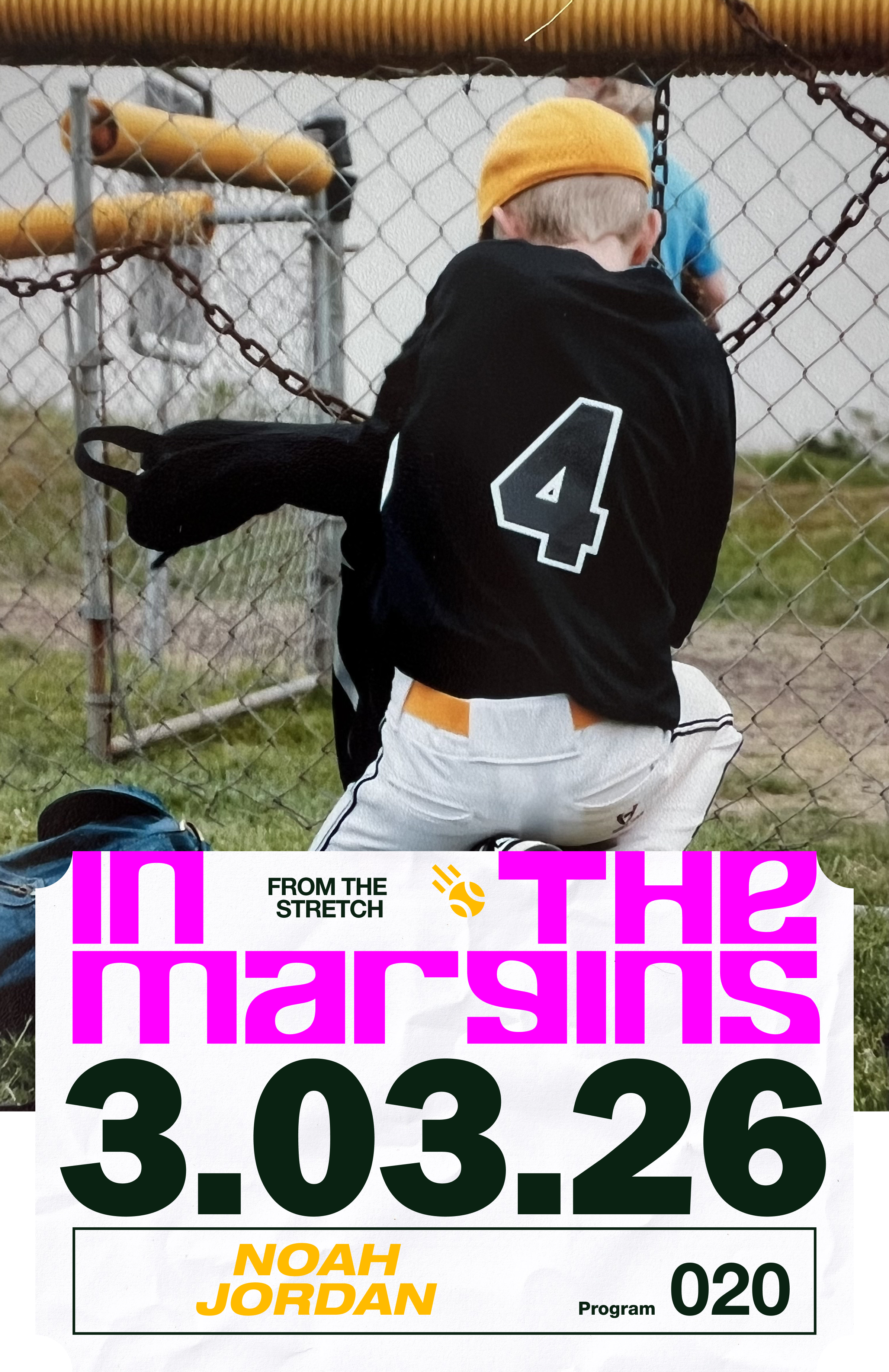
The spaces I was playing in at the time communicated different things. There was nothing grand about these Little League fields behind decrepit middle schools, no importance in the fenceless dogshit-littered outfields, only a minor heroism to leaving behind a husk of skin on the hardground basepaths anytime you slid. This was space that didn’t take you seriously. Space that insulted the adolescent aspiration.
And I had aspirations. They manifested primarily as daydreams, and these daydreams formed a narrative set in a progression of spaces. My imagined ascension of baseball’s ranks was mapped through greener grass, softening dirt, the lights getting brighter and the bleachers growing; a linear perfection of space terminating in an MLB stadium.
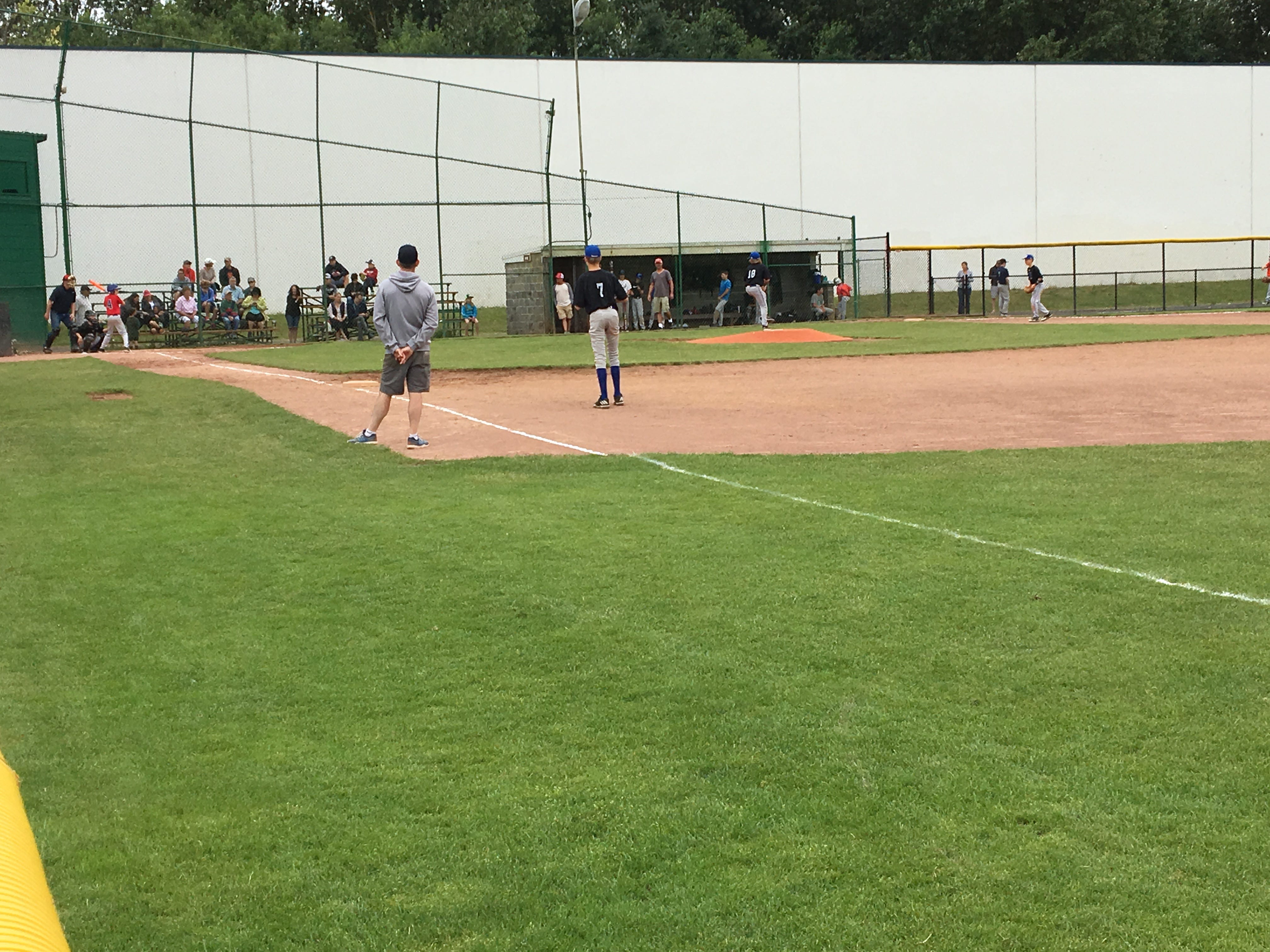
So it was affirming when, at the age of ten, by no accomplishment of my own, the space I played in spontaneously improved. My neighborhood league absorbed an adjacent one, a small league with a dwindling playership and one beautiful baseball field. Formally known as James Combs Field, colloquially as Riverside (itself a misnomer; the field was half a mile from a slough, pinned between two trucking warehouses), the field sat on a 2.2 acre lot, single-use and pristine. Yellow tubing on a permanent outfield fence, dugouts with real walls, dirt that didn’t flay. A proper ballpark. A space of singular purpose.
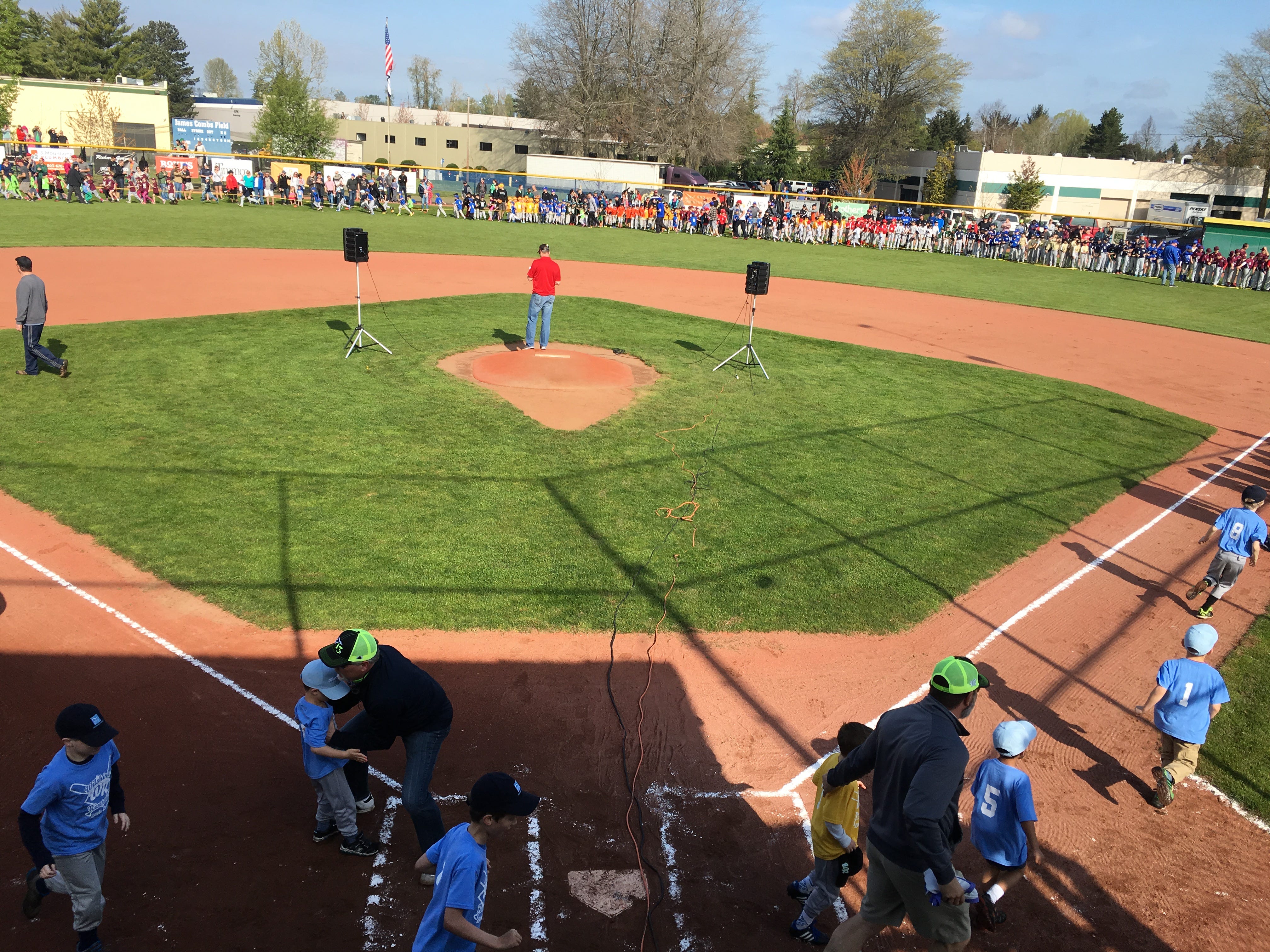
Or so it seemed to me then. Beyond the fenceline, Riverside was a space of different significance. On the bleachers nonelective groupings of adults gradually came to know a bit too much about one another. Against the proximal warehouses’s massive concrete side, younger siblings who were hyperglycemic from pilfered snack shack goods played invented ball games. In the parking lot last game’s players untied cleats and talked school gossip.
Repeat this for a week, a season, a year, and something more mysterious than space begins to emerge. Riverside became a place. And it is place, not space, that holds memory.
This is what I remember.
Two years after the merger was Riverside’s 30th anniversary, and my team was playing on the day of its celebration. The potluck and raffle had drawn the biggest crowd I had ever played in front of. The bleachers were full. People lined the baselines and leaned over the outfield fence. Many of them I knew. Some of them, thrillingly, I didn’t.
I was only in center field when it happened because our usual center fielder, a speedy kid who got under anything, had just thrown his helmet after striking out.
At the Little League level, 46 feet separate batter from pitcher, and another hundred or so: pitcher from centerfielder. Being directly behind the pitcher obscures the batters box, and because the batter was a righty I had stepped to my right to get an angle. Our pitcher, also right-handed, wound up, threw. The ball hurtled over dirt and grass, an object whose motion in space is the birth of every baseball play. The batter brought his aluminum bat into its path, rerouted force, and initiated the sport’s secondary spatial reorientation: a ball in the air, launched opposite-field, to my left, in a line drive with a moderate arc.
For the prepared fielder, the airborne ball commences a brief primal hunt. Space crystallizes into the distance between you and the projectile. Attention goes taut and the body takes independent action. The single animal question: Can I get there? The moments stretch. After, you remember only flashes.
I was moving, racing laterally across the field into the right-center gap. Sometimes you need to run a bit to know if you have a chance. The ball was hanging and I was running and I didn’t know. In the absence of knowledge, belief fills in. You only need a sliver to keep running.
The first few seconds in the air are ages, but the last few are blinks. Thirty feet, twenty feet, falling, the space slamming shut and I can see it’s spinning now, see I’m still not there, leaning forward, ten feet, push off the grass, enter the air, empty space.
When a professional makes a full stretch diving grab, the viewer thinks first of their skill. But these players’ faces betray no such self-satisfaction. The smaller the margins get, the more the player is aware of space’s dominion. They exert themselves to the extent, and whether that’s enough is a question space will answer.
Space, and circumstance. Such as: it’s the wrong kid in center, and he picked the wrong side of the pitcher, and the ball’s gone opposite field with backspin, and the bleachers are filled, and only now can you consider that the ball is just a few feet from the ground and I’m off the ground too, completely horizontally elongated, reaching my glove’s webbing for the ball’s arc. Is it enough? Space knows.
But space is not the reason these people are here. It’s not the reason a woman I’ve never met has my mom’s sleeve in white knuckle vise-grip, nor why the benched centerfielder (who at our first practice declared his desire to make a diving catch this season) looks like he’s seen a ghost. The spatial relationship between my suspended body and the round falling object could be arbitrary, but instead it is meaningful. Meaningful because the rules of baseball say so. Meaningful because we all know these rules. Meaningful because although space mediates the play, place mediates what comes after. And the play is ending now. I’m thudding back to the ground, whooshing across thousands of blades of green grass. The bleachers groan as everyone stands up at once.
Noah Jordan is a writer based in Portland, OR.