

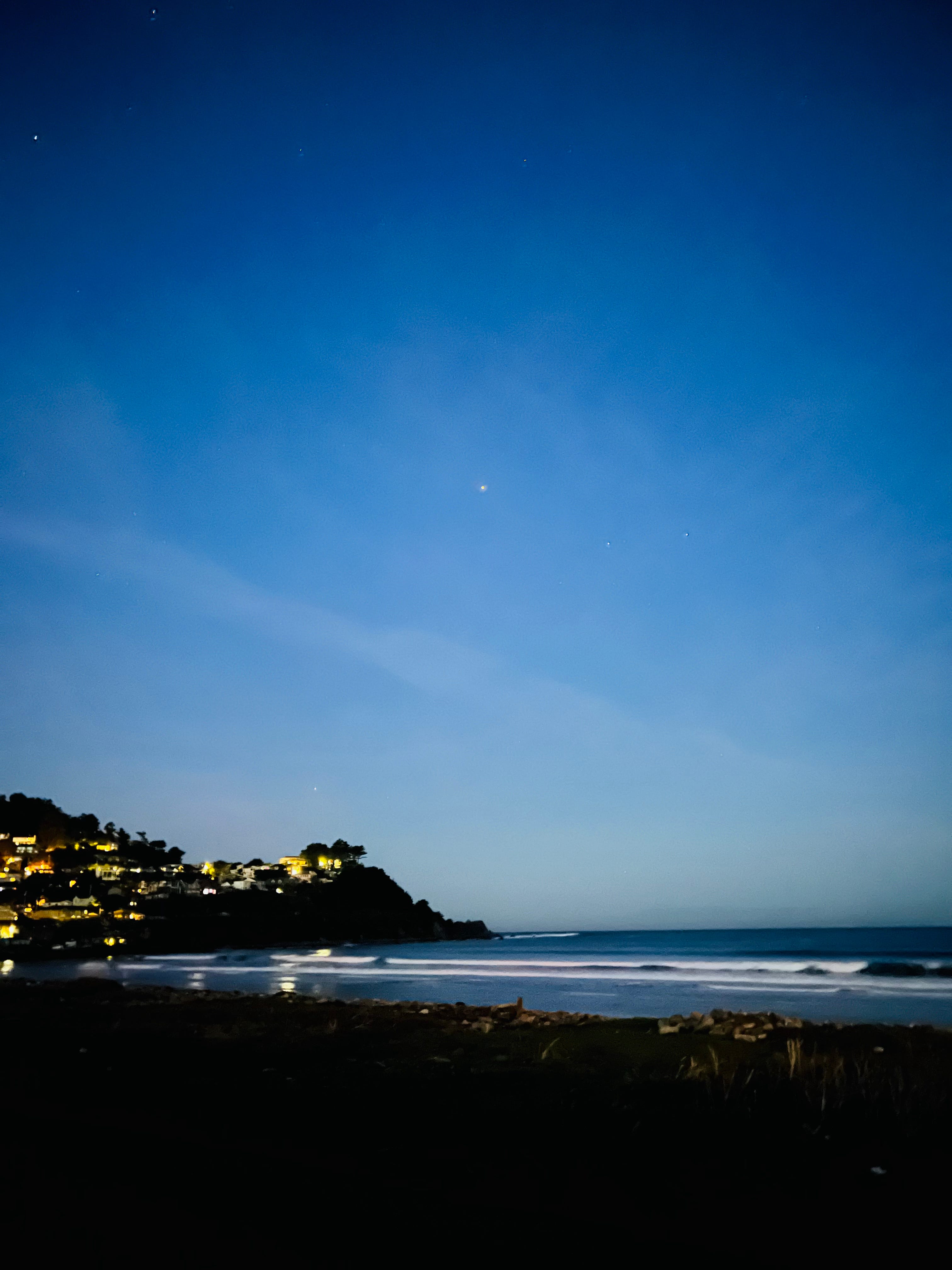
When it comes to surfing, I’m a creature of twilight. I rouse in the night. In the thirty minutes it takes to get to the ocean from my house, something shifts imperceptibly as the sun works its way through astronomical twilight to nautical dawn, twelve degrees below the horizon. The dark hangs on even as I arrive, when nautical twilight begins.
At the beach, I pull up alongside my friend’s VW bus with its cheerful lemon-yellow finish briefly aglow before I kill the headlights. I join Z at the top of the dunes and we discern what we can of shape from the barely perceptible whitewater. Let’s go north, he says. It’s an act of faith to follow, and I do.
Ten minutes later, surfboards tucked under our arms, we hit the sand and make our way toward the rocky cliffs, chatting about holidays, kid slumber parties, work dramas. As we approach the waves, our conversation takes a hard turn to surf logistics: sizing up the sets, pinpointing the ideal peak, locating the channel in which to paddle out and avoid taking five-foot whitewater on the head. I have my doubts and voice them. But we go.
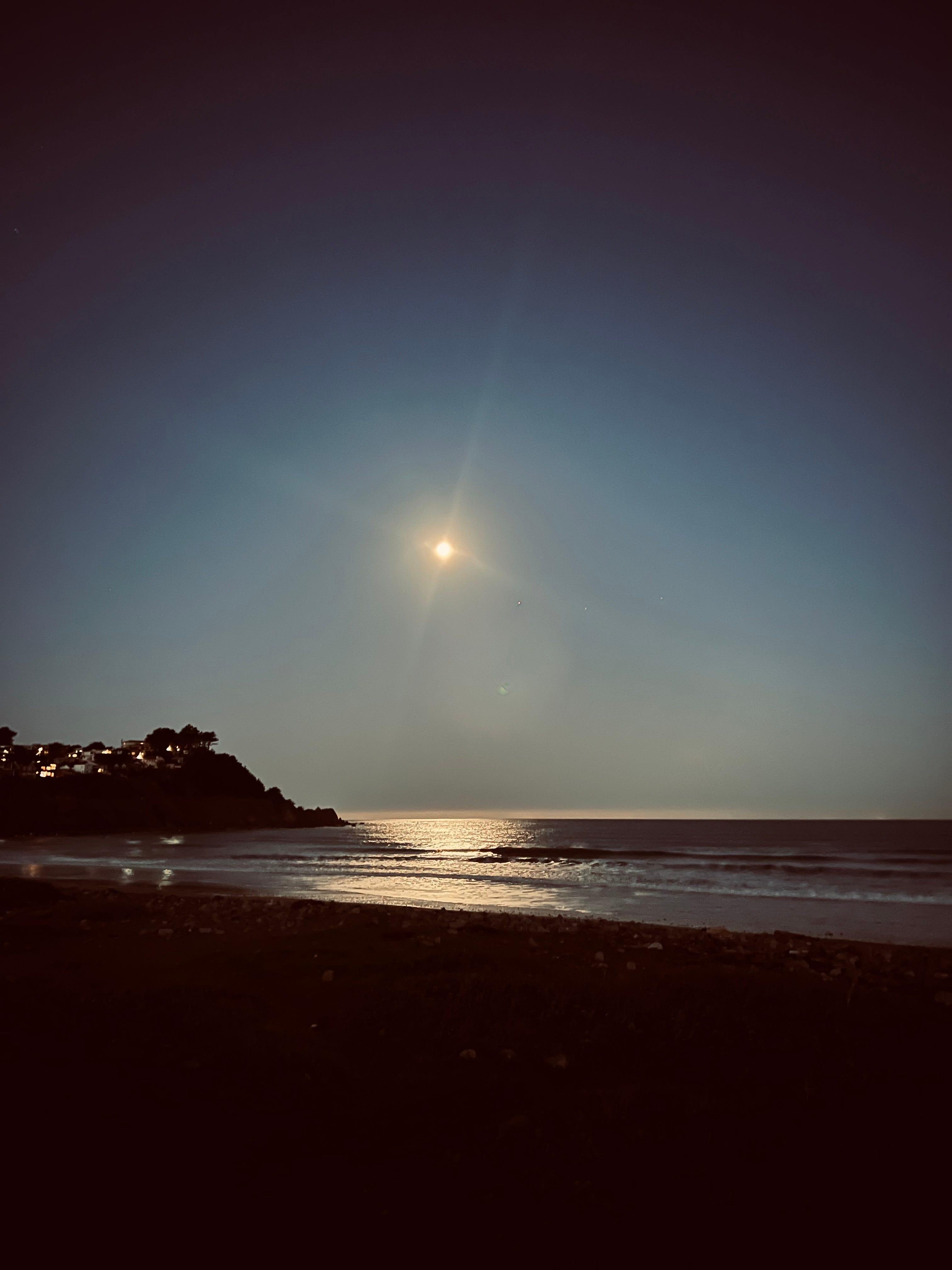
Each morning is different. Some days, as I crest the hill overlooking the beach, the fog is rolled out thick and flat before me like a carpet. I hear the crash of the surf before I get close enough to see it, and it’s a battle to get out. Every once in a while, a full moon hangs in a clear sky, illuminating the seascape and giving us an early pre-dawn start. Other mornings, the clarity of the air and burgeoning light is so sharp that it’s almost painful to behold. The paddle out feels effortless, the sky pinking and warming the glassy surface of a liquid-mercury sea. I love this time: the in-betweenness of civil twilight, during which the sun hasn’t yet broken the horizon and the earth is neither completely illuminated nor completely dark.
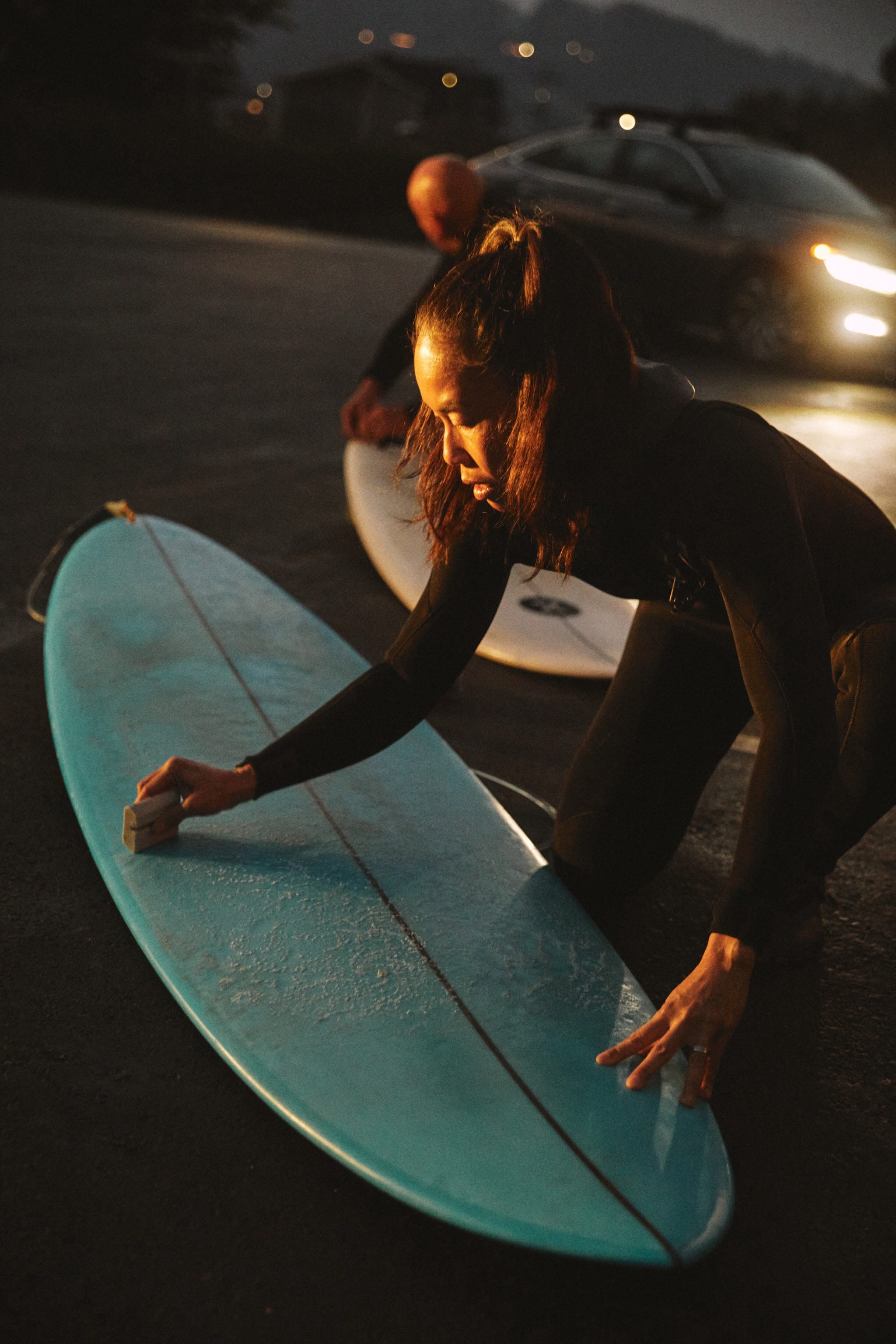
Not long ago, it had been a season laced with worry with me hopscotching between coasts to visit my mother in the hospital. At the end of a particularly hectic flight pattern between New York and California, I emerged again at the beach at civil twilight. In the darkness of the parking lot, my friend Jeff gave me a hug and asked how my mom was doing.
That morning in the water, it wasn’t a surprise that I felt off-kilter, off-balance… just off, in body and mind. Jeff watched me struggle for a bit. Then he offered up his surfboard, to help me reset. Want to try this? I think you’ll like it. An attempt to switch up my muscle memory, to kick out of bad habits with something new. We undid our leashes and swapped boards. I was resistant at first, but once I gave in, I had fun just noticing the differences of how my body reacted subtly to this new plank at sea.
Then a good one came, a sizable left that took me away. I felt off-balance again, but in a different way—now I was in the driver’s seat and could maneuver the board up and down the wave as it took me all the way to shore. It swept the slate clean.
I returned the board to Jeff with gratitude. A feeling of I can do this. It extended to my mind and heart.
I told this story while on the phone with another friend later that day, and she got quiet. It’s just such a simple and generous thing to do, she said. It’s so humane. And it got me thinking about all the quiet, invisible ways that this early morning ritual of mine washes over the rest of my life. The liquid dark of twilight has room to hold all that we might bring to it.
Another morning at the local, my friend David pulls a balance board he made himself out of the trunk of his car, and hands it to me to practice cross-stepping at home. Try it for as long as you want, he told me. And have fun with it.
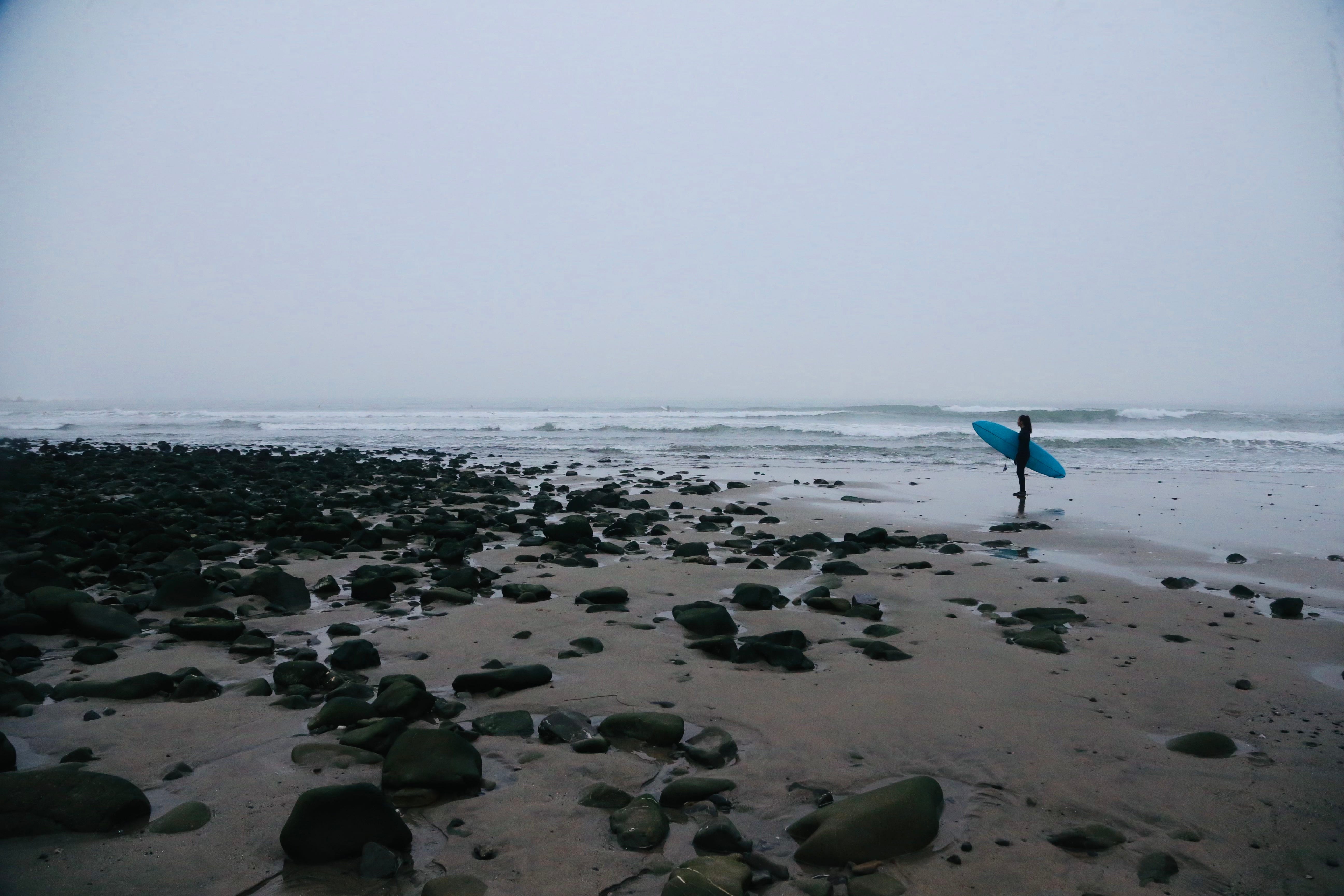
I’ve ridden countless waves in many places since I began surfing more than fifteen years ago. But my home break is the daily and the regular, the reliable grounding center—the hub around which I have built the spokes of a true surf practice. All year round, I make my way in the dark to be there at first light—to avoid the worst of traffic and crowds, yes, but also to be with the kind of people who show up then.
We wax poetic, but we’re also all business. We shove ourselves into five-millimeter wetsuits in the sharp bite of a winter morning. Sometimes it’s raining. Sometimes there’s frost on the car and enough chill that our breath hangs in the air.
It is absolutely a faith-based act to show up in the dark, when your eyes can’t yet tell you what you’ll find. The dark gets a bad rap. But in its shapeless mystery is potential. Grit and discomfort, humility and humanity—and the moments of glory that come in the mix.
This is what I love: the granular day-in, day-out ordinariness of it, the commitment to show up no matter what. And the meditative transcendence to be found in that practice.
On a recent dawn patrol, my friend Sue and I sat in the lineup, chatting about nothing special. We looked at the water, so clear and glassy, with a slight surface chop from the wind. It’s like chopped glass, she said, the water running through her fingers. Clean waves came through, cut through with low-angled light. As we got dressed in the parking lot afterward, warmed by the sun, we giggled and sang a refrain about chopped glass.
These are the shards of beauty we look for, the reward when dawn arrives.
Bonnie Tsui is a writer who lives in California.
This is a really lovely piece Bonnie, really conjures up the visuals of the sea at dawn and the shared love of the water.