

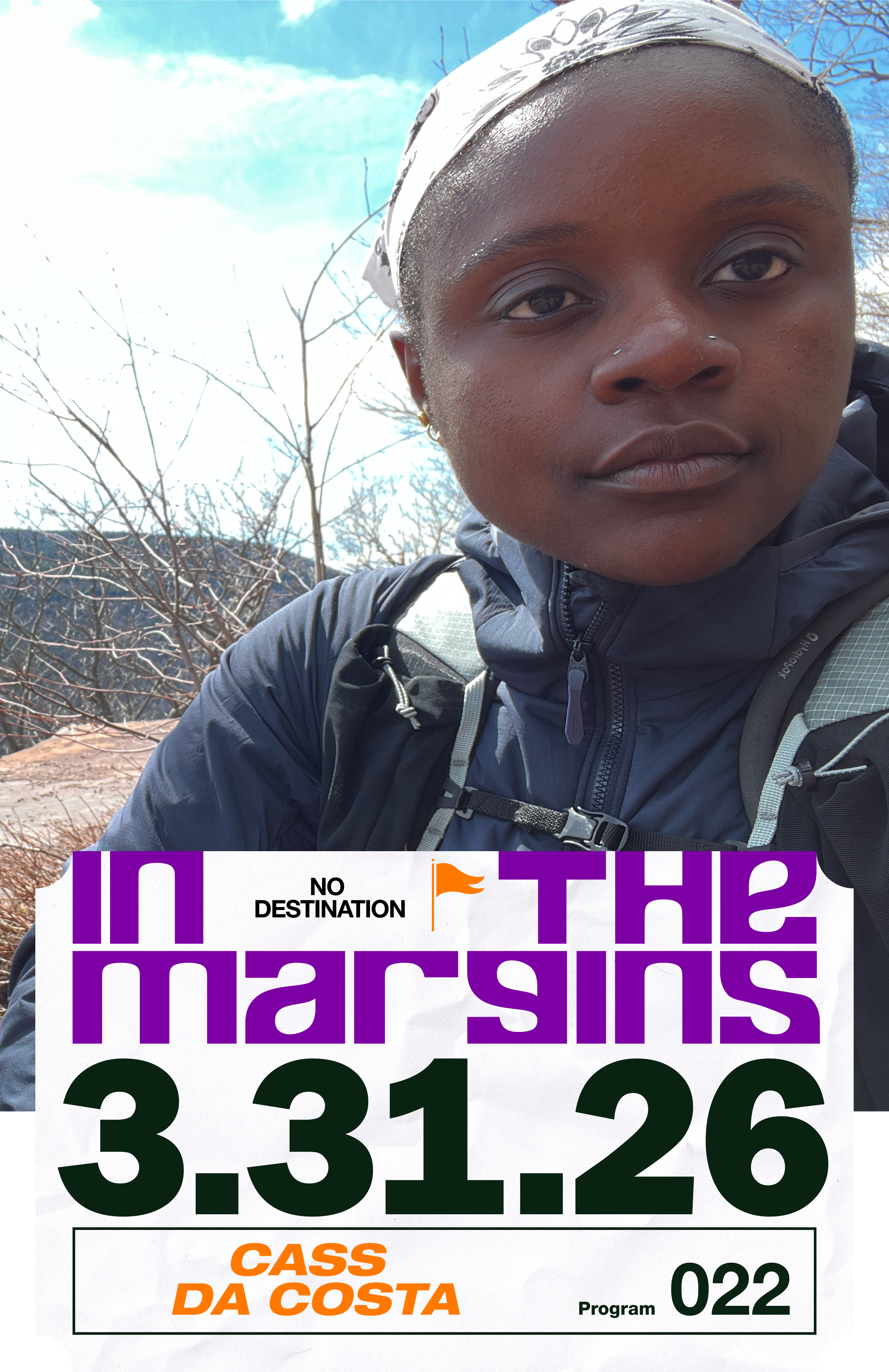
Sometimes you have to ask the obvious question. Must there always be fruits of our labor? Do we hate our failing bodies? It’s the relentless superego. The always-advocate for productivity and the often-enemy of creativity. I tend to think about this drive in two ways: with romantic relationships, and with movement. In my world, they are intimately related. Right now, I’m dating someone who shows up reliably and punctually, though some would say I see him infrequently. Two to four times a month. To me, to both of us, this is a sustainable relationship. This is a compatible frequency, a collaborative consistency. Those are not typically romantic phrases, but I find the whole thing enchanting. What we have is a mutual acknowledgement of our inevitable failure—that we will not be here always and forever. Disability studies, non-monogamy, phenomenology, and psychoanalysis have taught me as much—that the act of being together cannot be predicated on being “enough.”
It all hinges on being, full stop. My lover and I see other people and do other things. We take our respective time, with ourselves and with each other. We talk about it. We agree and disagree. There is no destination. It’s not always easy for me—sometimes it’s tempting to listen to the voices that say constant contact, reassurance, a perpetually open door, are the premium signs of love. Absence and yearning are in plenty of novels and films, but they are harbingers of doom. The idea is to find a way to be together always and to never change so much that your union can be undone. Your story has now merged with another’s story and you’ll never part. It’s a kind of identity—if you find this kind of love you can now label yourself and your Other: partner, spouse, boyfriend, fiancé. You never have to stand alone again.
I was once in a relationship where we lived together, bought a car together, adopted a dog together, and mixed our finances. There was an intensity between us. It took only a few months of knowing each other to establish exactly where we were headed. We chose to identify, and thus release ourselves from not knowing. But it took me years after the breakup to realize that the desire for this kind of closeness was not because I needed to identify and be identified by my then-girlfriend, but because I wanted to luxuriate in the harmony of companionship. I’ve learned, in these post-relationship years of regeneration, that people can be “with you” in ways that are not constantly proximate or heightened. That this kind of wading in and out was its own luxury, the way that taking your time is sweet and expensive. It’s as codependent as any binary: absence relies on presence as some more desirable north star, but presence in turn depends on absence to hold its superior place. Companionship then, is a way to hold both in equal regard—that you will never possess another person and, as such, you will never lose them. Now, I live with friends in a house. I have a job that allows me to work from anywhere, so I see my best friend, who lives across the country, several times a year. I spend weeks at a time with my sisters and their babies in other states. I’m in a relationship where either of us can wade in and out. Even if it changes, even if one thing ends so another can begin.
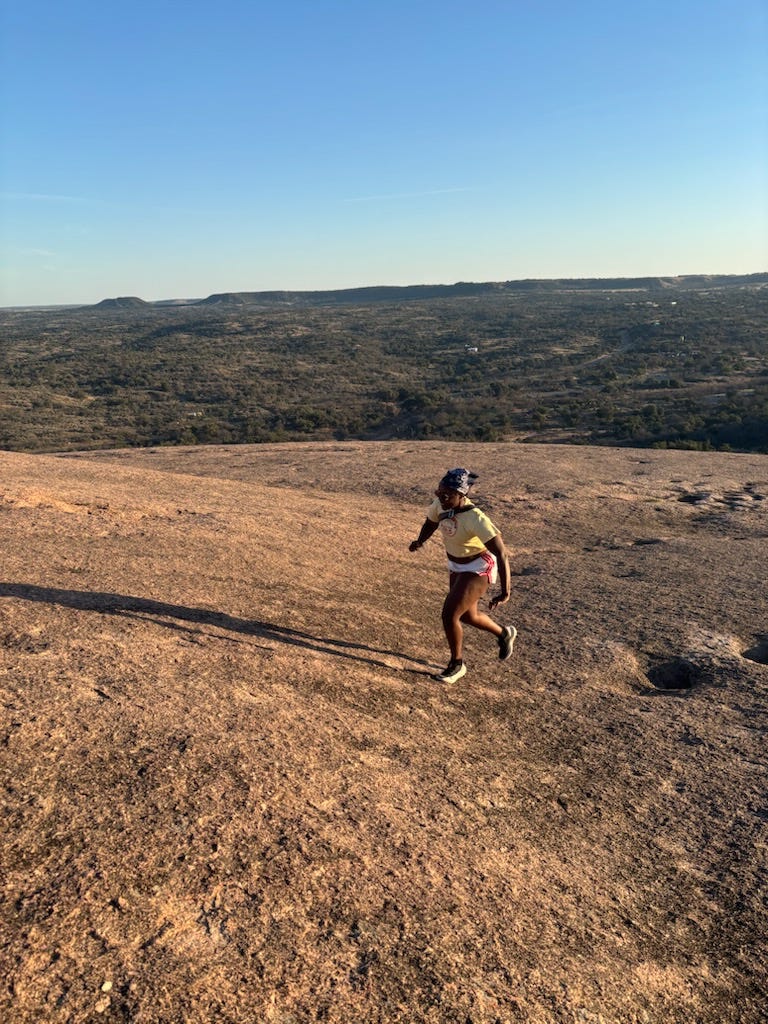
I’ve found a similar way of moving that mirrors my experience of identification. For years, I was a runner—obsessively—building up to nearly 50 miles a week on roads and trails. I needed the reassurance, the constancy, the results. I got faster and stronger and thinner. I needed to be productive and to prove something to everybody through the body I produced—I wanted to show how I could be useful and that I wouldn’t be a burden. I wanted the work I put in to mean something. I wanted to do a job and be rewarded by the boss, who wasn’t me. I wanted so desperately for someone else to take the reins. I wanted my girlfriend to admire me and not feel smothered by me. I had a minimal sense of my autonomy or what it might do for me; it stood naked, ashamed. What I did was all for someone else. This was what I wanted and for a while it felt good. I was praised for my discipline, for my smaller body, for my devotion to keeping time and pace. And it wasn’t just running. Before that, it had been Ashtanga yoga six days a week. Previously, it had been daily walks across the Brooklyn Bridge and long morning sessions at the spin studio near the lower Manhattan office where I worked as an editorial assistant. The not-me that was now running everything was this invisible hand that, unlike me, could be noble and divine, guiding me to pure and beautiful acts. It was not needy or desperate or controlling. I began to understand what other people saw in religion.
Recently, I told my best friend that I’m realizing the smaller size I maintained from being constantly active through those years was reassuring not because my body was thinner, but because my breasts were smaller from the weight loss. Now, I like most of my body—my rounder tummy and thicker thighs, but I still think about that smaller chest. Tiny titties. No overhang. I wonder if it might make sense to separate these things in my heart and my mind. I think some more.
It was through a winding and terrifying road that I found my way out of my relentless movement and back into my bigger body. First, I started to feel sick, lost, and separate from myself. Then, my relationship suddenly ended. I was unborn again, and forced to start thinking about what I wanted. I started therapy after a 4 year hiatus. I moved back across the country. I ran less. Then more then less again. I took up piano lessons for the first time since childhood. I dated people who were lovely but, I eventually learned, not so good for me. I talked a lot about those people to my friends and to my therapist as a way of talking about myself. I started moving more slowly and with more acceptance. Now, I luxuriate in the time it takes to get from here to there and back again. I don’t have to know where I’m going or what kind of person the going makes me.
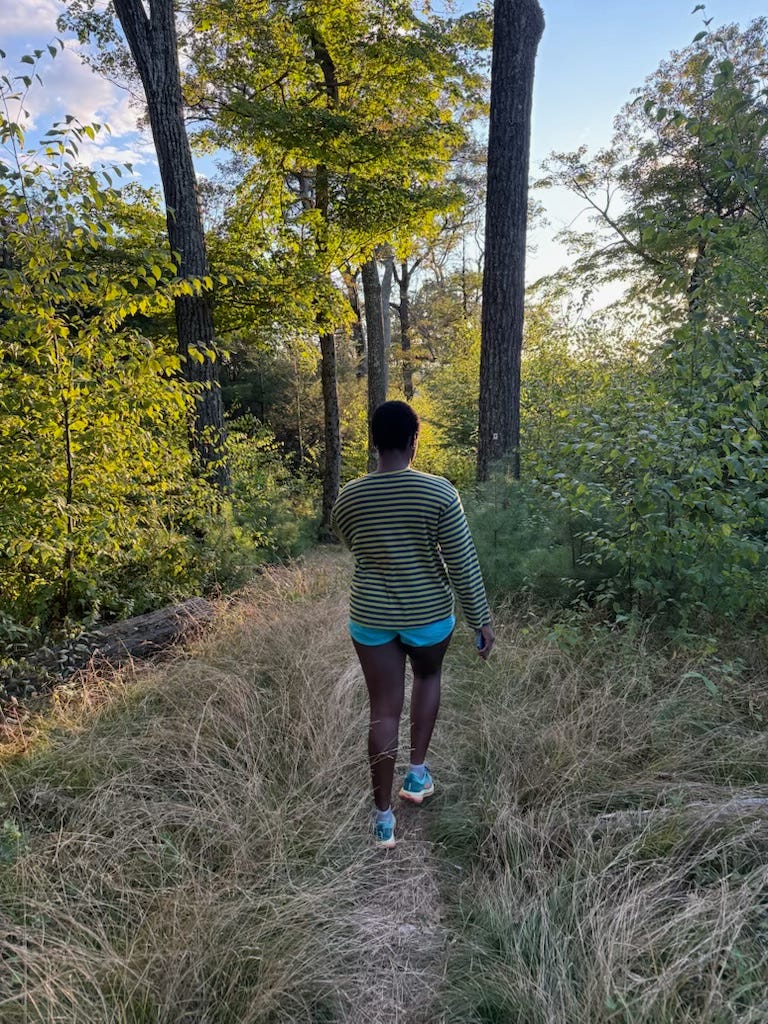
Still, today, it’s easy to get drawn back into the relentless old routine: all or nothing. I see influencers on social media build their identities around physical productivity as a sign of morality. They are committed to themselves. They don’t just show up two or four times a week, but every day. This means they truly love themselves. And reader, if you wanted to, you would. I see other people, perhaps people more like me, comment that they watch these peppy workout videos not for instruction, but passive satiation. They’re not going to do the workout. I get it—it’s all too much. We become avoidant partners to our own bodies. Low commitment, long distance part-time boyfriends of movement. Does that make us bad people? Should we leave the real lovers and movers alone?
I look at my new routine. Is it productive? Do I need it to be? If I want both a smaller chest and my bigger body, there are other strategies. If I want both companionship and autonomy, I’ll have to talk to the people I love and make plans with them. I’ll have to accept that when these people are not around it’s because they’ve decided to be somewhere else and with someone else; and they’ll have to accept the same about me. We’ll celebrate that we are different people with different hearts and minds, and when we see each other, it will be with pleasure. If I want to move with pleasure, I cannot see myself as a machine or an employee. I might have to accept the paradoxes of what moving means. I recently rejoined the YMCA at the encouragement of one of my older, postpartum sisters (I have two older sisters, both of whom are postpartum). Neither of us believes we can or should try to attain the bodies we once had. Movement is no longer in pursuit of some kind of physical transformation that will redeem us, that will make us less ashamed. But moving itself is the pleasure. It will probably physically transform us somehow but, without the rigid control of relentless discipline and guaranteed results, we entertain greater imaginations about what might happen. I have some fantasies about slowly climbing on the stairmaster to improve my endurance with less impact, using the cable machines in complex ways to bolster my aching shoulders, and, once my nose piercings have healed more, completing a few continuous laps in the pool. I’ll think about all the people who have held me through these years. I’ll try to remember that movement does not have to be intense, constant, or eternal for it to be loving.
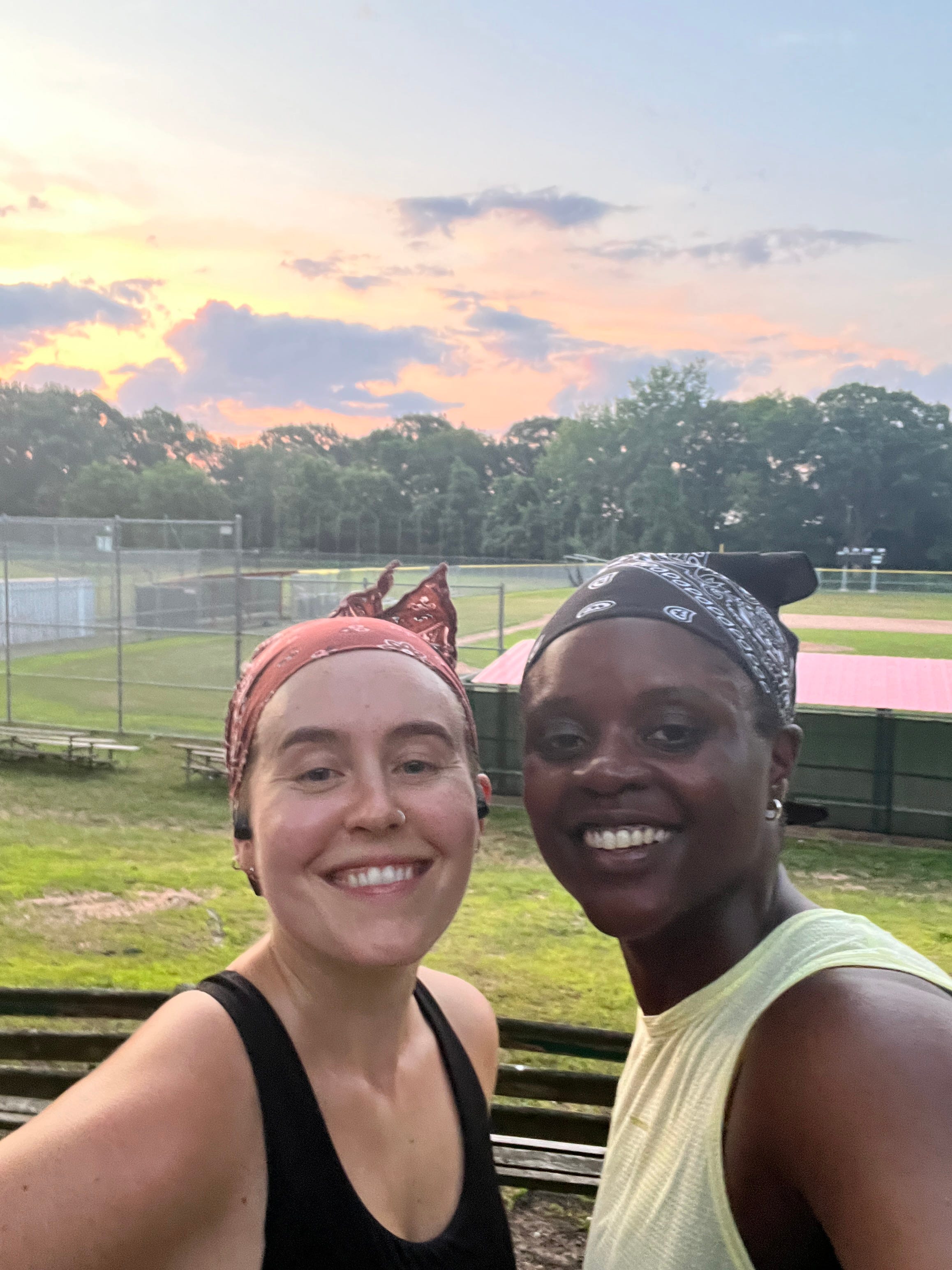
Cass da Costa is a writer and editor living in Brooklyn, NY.
Love you deeply! Love the pictures.